
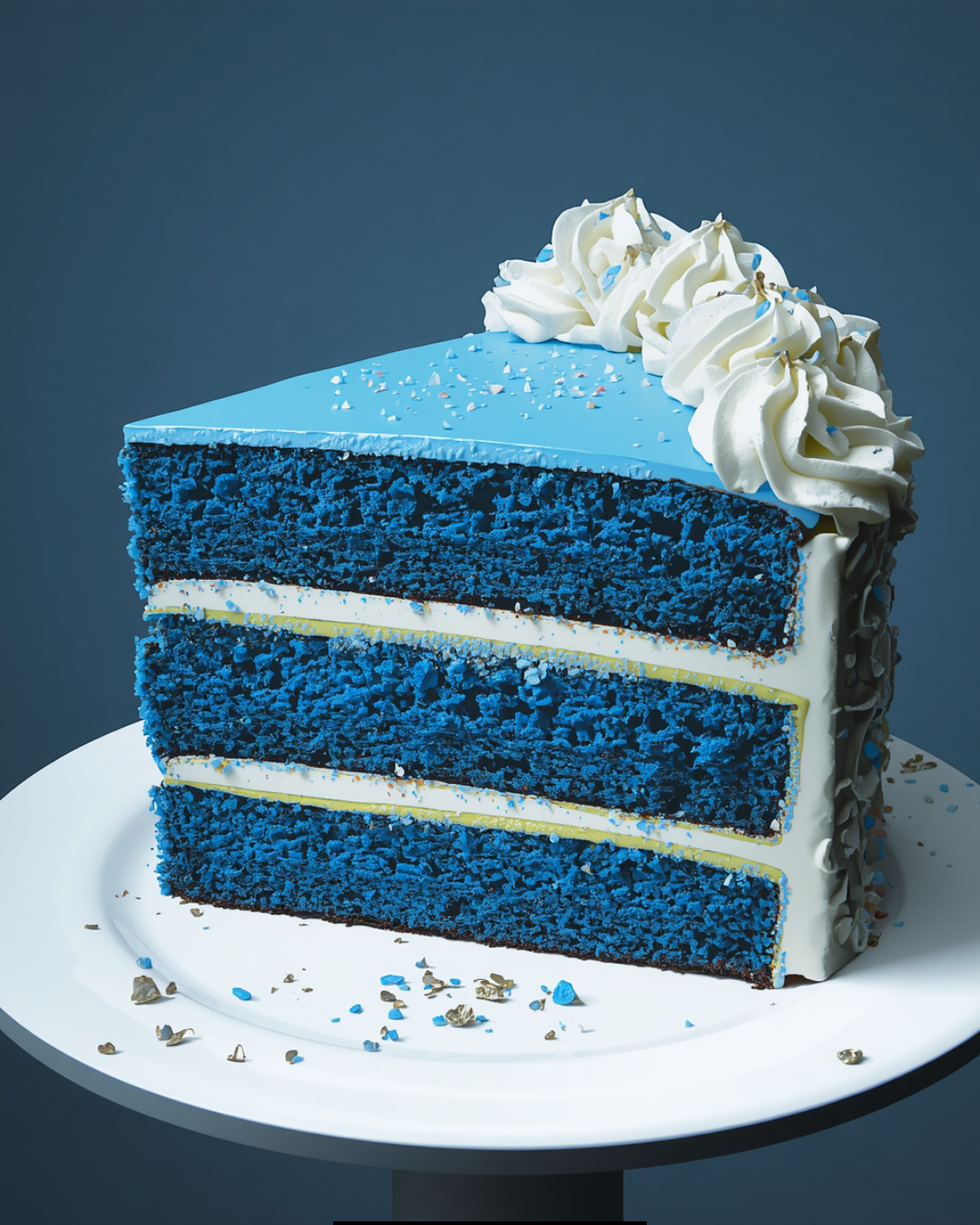
I still remember the first time I made a Blue Velvet Cake—it wasn’t just a dessert, it was a centerpiece. Everyone at the table gasped as I cut into it to reveal its striking blue interior. If you’re looking for a recipe that combines elegance, fun, and flavor, you’re in the right place! Today, I’m so excited to share my step-by-step guide to baking the perfect Blue Velvet Cake at home.
Table of Contents
How to make Blue Velvet Cake
Blue Velvet Cake is a colorful twist on the classic Red Velvet Cake—basically the same soft, moist cake but dyed a vibrant blue instead of red.
Ingredients
Here’s everything you’ll need to create a moist and flavorful Blue Velvet Cake:
For the Cake:
- 2½ cups (310g) all-purpose flour
- 2 tablespoons unsweetened cocoa powder
- 1½ teaspoons baking soda
- ½ teaspoon salt
- 1 cup (240ml) buttermilk
- 2 teaspoons white vinegar
- 1½ cups (300g) granulated sugar
- ½ cup (120ml) vegetable oil
- ½ cup (115g) unsalted butter, softened
- 2 large eggs
- 2 teaspoons vanilla extract
- 1 tablespoon blue gel food coloring (or as needed)
- Optional: ½ teaspoon purple gel food coloring
For the Cream Cheese Frosting:
- 1 cup (225g) cream cheese, softened
- ½ cup (115g) unsalted butter, softened
- 4 cups (500g) powdered sugar
- 2 teaspoons vanilla extract
Instructions
- Preheat your oven to 350°F (175°C).
- Grease and lightly flour 2 (9-inch) round cake pans or line the bottoms with parchment paper for easy removal.
- In a medium-sized bowl, sift together the flour, cocoa powder, baking soda, and salt. Set aside.
- In a large mixing bowl, cream together the sugar, vegetable oil, and softened butter using a hand mixer or stand mixer until light and fluffy (about 2-3 minutes).
- Beat in the eggs, one at a time, ensuring each is fully incorporated before adding the next.
- Mix in the vanilla extract.
- In a small bowl, combine the buttermilk with the blue food coloring (and a touch of purple, if needed) until blended.
- Gradually mix the buttermilk mixture into the wet ingredients, alternating with the dry ingredients. Start and end with the dry ingredients (add them in three batches, and buttermilk in two). Mix just until combined—don’t overmix.
- Finally, stir in the vinegar. This will react with the baking soda, giving your cake its perfect rise.
- The batter should now be smooth and beautifully blue.
- Divide the batter evenly between the prepared cake pans.
- Smooth the tops with a spatula, then bake at 350°F (175°C) for 25-30 minutes, or until a toothpick inserted in the center comes out clean.
- Let the cakes cool in their pans for 10-15 minutes before transferring them to a wire rack to cool completely.
- In a large mixing bowl, beat the cream cheese and butter together until light and creamy.
- Gradually add the powdered sugar (about 1 cup at a time), mixing on low to avoid sugar clouds. Then, beat on high for 1-2 minutes until smooth.
- Mix in the vanilla extract. If desired, chill the frosting for 15 minutes to firm it up for easier spreading.
- Place one cake layer on a serving plate or cake stand. Spread a thick, even layer of frosting on top.
- Gently place the second cake layer on top, and frost the entire cake, including the sides.
- Decorate as desired with sprinkles, edible glitter, or piped designs.
Pro Tips for a Perfect Blue Velvet Cake
- Use Gel Food Coloring: Gel food coloring provides a more vibrant hue without altering the texture of the batter, unlike liquid coloring.
- Room Temperature Ingredients: Ensure your eggs, butter, and cream cheese are at room temperature to create a smooth, even batter and frosting.
- Don’t Overmix: Once you add the dry ingredients, mix until just combined to avoid a dense cake texture.
- Cake Leveling Tip: If your cake layers bake unevenly, level them using a serrated knife before stacking to ensure a flat, stable surface for decorating.
- Chill Before Slicing: For clean, neat slices, refrigerate the cake for about 30 minutes before cutting.
What to serve with
Blue Velvet Cake is already a star on its own with its stunning color, velvety texture, and rich cream cheese frosting. But pairing it with the right accompaniments can elevate the experience and create a memorable dessert presentation.
1. Fresh Berries
Juicy, tart berries provide a refreshing contrast to the sweet and creamy elements of the Blue Velvet Cake. Their natural acidity balances the richness of the cake and adds a pop of color to the presentation.
Suggested Berries:
- Strawberries: Serve sliced for extra sweetness.
- Blueberries: Match the blue theme of the cake!
- Raspberries: Their tartness cuts through the sweetness nicely.
- Blackberries: Provide both tart and sweet flavors.
2. Ice Cream
A scoop of ice cream alongside a slice of Blue Velvet Cake turns dessert into a true indulgence. The cold, creamy texture of ice cream pairs wonderfully with the soft, moist cake.
Best Ice Cream Flavors:
- Vanilla Bean: Classic and light, letting the cake shine.
- Cream Cheese Ice Cream: Matches the frosting flavor for a cohesive pairing.
- Salted Caramel: Adds a rich, buttery contrast.
- Blueberry Swirl: Amplifies the blue theme with fruity undertones.
Ingredients Substitutes
Baking a Blue Velvet Cake is both fun and rewarding, but sometimes you might not have all the ingredients on hand—or you may want to tweak the recipe to suit dietary restrictions, personal preferences, or availability.
1. All-Purpose Flour
If you don’t have all-purpose flour on hand or prefer a different option:
- Substitute with Cake Flour: Use 2¾ cups of cake flour for every 2½ cups of all-purpose flour (as cake flour is lighter). This gives the cake an even finer, more velvety texture.
- For Gluten-Free Cakes: Replace the flour with a gluten-free all-purpose flour blend. Look for a 1:1 gluten-free flour mix that already contains a binding agent like xanthan gum for the best results.
- Avoid single-ingredient replacements like almond or coconut flour, as they alter the texture significantly.
2. Cocoa Powder
Since Blue Velvet Cake only uses a small amount of cocoa powder for a subtle chocolate flavor, you can swap or adjust it while keeping the essence intact:
- Dutch-Processed Cocoa Powder: Use this for a milder, smoother chocolate flavor, but note that you may need to adjust your leavening agents (since it’s less acidic than natural cocoa powder).
- Carob Powder: A caffeine-free option with a slightly sweet, earthy flavor. Use an equal amount as a substitute.
- Omit Cocoa Powder: If you want a stronger vanilla-forward flavor and are okay with forgoing the light chocolate notes, skip the cocoa powder.
3. Buttermilk
Buttermilk is key to achieving that soft, tender crumb in a velvet cake, but if you don’t have it, there are several easy substitutions:
- DIY Buttermilk (Best Alternative): Mix 1 cup of milk (whole or 2%) with 1 tablespoon of vinegar or lemon juice. Let it sit for 5–10 minutes to curdle slightly.
- Plain Yogurt or Greek Yogurt: Replace 1 cup of buttermilk with ¾ cup plain yogurt mixed with ¼ cup water or milk to mimic the same consistency.
- Plant-Based Buttermilk (Vegan Option): Use plant-based milk (like almond, soy, or oat milk) and stir in 1 tablespoon of vinegar or lemon juice. Let it sit until it curdles.
4. White Vinegar
Vinegar reacts with baking soda to help the cake rise and stay light. If vinegar isn’t available:
- Lemon Juice: Replace vinegar with an equal amount of freshly squeezed lemon juice. This provides acidity for the same chemical reaction.
- Apple Cider Vinegar: Another acidic alternative with a milder flavor compared to white vinegar.
Final Thoughts
That’s it! Your Blue Velvet Cake is all set to dazzle your guests with its vibrant color, tender crumb, and indulgent cream cheese frosting. Whether you’re making it for a birthday party, baby shower, or to treat yourself, this cake is guaranteed to impress.
More Cake Recipes:

Ingredients
For the Cake:
- 2½ cups (310g) all-purpose flour
- 2 tablespoons unsweetened cocoa powder
- 1½ teaspoons baking soda
- ½ teaspoon salt
- 1 cup (240ml) buttermilk
- 2 teaspoons white vinegar
- 1½ cups (300g) granulated sugar
- ½ cup (120ml) vegetable oil
- ½ cup (115g) unsalted butter, softened
- 2 large eggs
- 2 teaspoons vanilla extract
- 1 tablespoon blue gel food coloring
- Optional: ½ teaspoon purple gel food coloring
For the Cream Cheese Frosting:
- 1 cup (225g) cream cheese, softened
- ½ cup (115g) unsalted butter, softened
- 4 cups (500g) powdered sugar
- 2 teaspoons vanilla extract
Instructions
- Preheat your oven to 350°F (175°C).
- Grease and lightly flour 2 (9-inch) round cake pans or line the bottoms with parchment paper for easy removal.
- In a medium-sized bowl, sift together the flour, cocoa powder, baking soda, and salt. Set aside.
- In a large mixing bowl, cream together the sugar, vegetable oil, and softened butter using a hand mixer or stand mixer until light and fluffy (about 2-3 minutes).
- Beat in the eggs, one at a time, ensuring each is fully incorporated before adding the next.
- Mix in the vanilla extract.
- In a small bowl, combine the buttermilk with the blue food coloring (and a touch of purple, if needed) until blended.
- Gradually mix the buttermilk mixture into the wet ingredients, alternating with the dry ingredients. Start and end with the dry ingredients (add them in three batches, and buttermilk in two). Mix just until combined—don’t overmix.
- Finally, stir in the vinegar. This will react with the baking soda, giving your cake its perfect rise.
- The batter should now be smooth and beautifully blue.
- Divide the batter evenly between the prepared cake pans.
- Smooth the tops with a spatula, then bake at 350°F (175°C) for 25-30 minutes, or until a toothpick inserted in the center comes out clean.
- Let the cakes cool in their pans for 10-15 minutes before transferring them to a wire rack to cool completely.
- In a large mixing bowl, beat the cream cheese and butter together until light and creamy.
- Gradually add the powdered sugar (about 1 cup at a time), mixing on low to avoid sugar clouds. Then, beat on high for 1-2 minutes until smooth.
- Mix in the vanilla extract. If desired, chill the frosting for 15 minutes to firm it up for easier spreading.
- Place one cake layer on a serving plate or cake stand. Spread a thick, even layer of frosting on top.
- Gently place the second cake layer on top, and frost the entire cake, including the sides.
- Decorate as desired with sprinkles, edible glitter, or piped designs.