
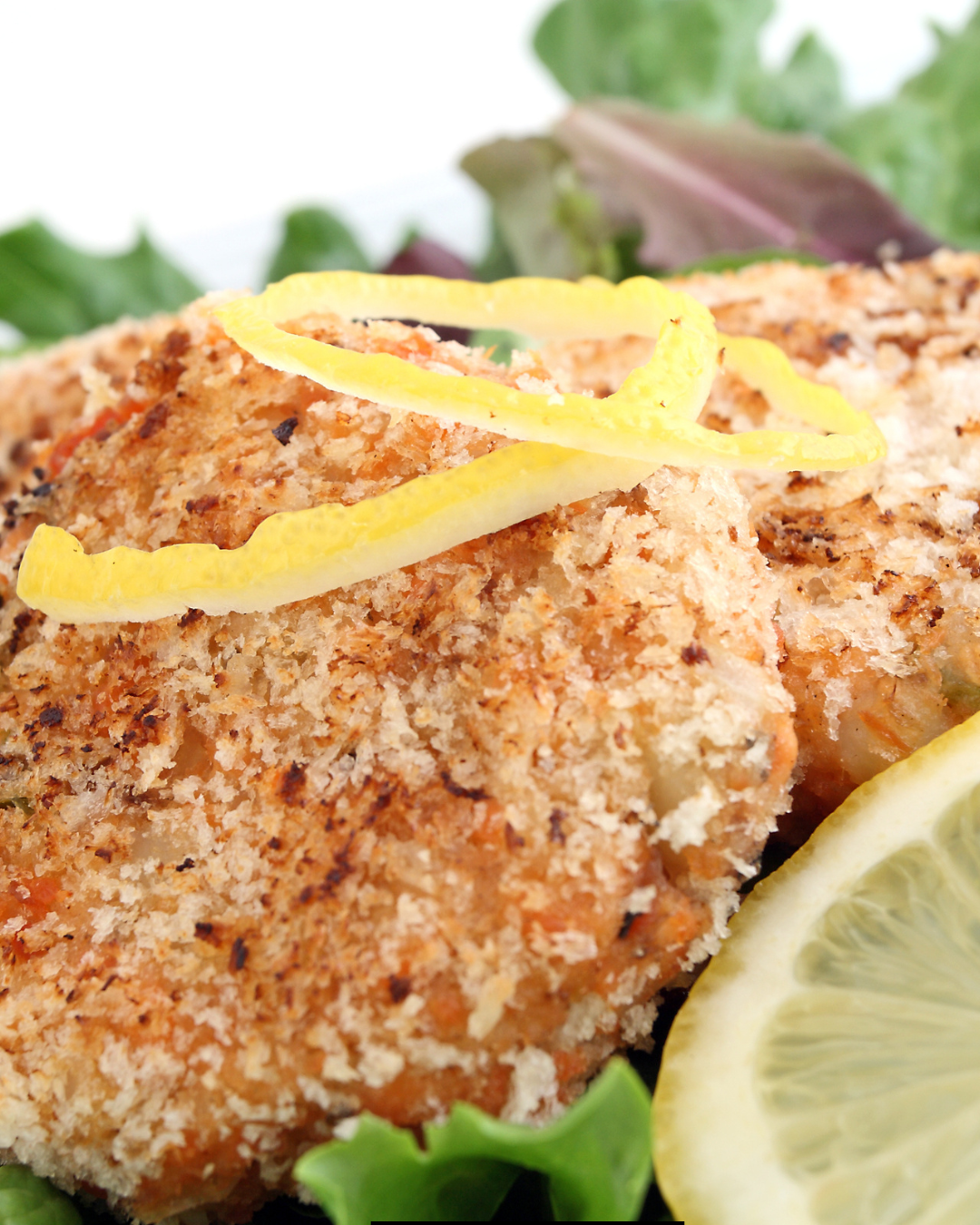
What I love most about this Canned Salmon Cake recipe (aside from the taste!) is its versatility. You can dress these salmon cakes up with herbs, spices, or sauces—or keep them simple for a nostalgic, old-fashioned flavor. Plus, they’re ready in no time, making them perfect for those days when you want something wholesome but don’t have the patience for complicated cooking.
Table of Contents
How to make Canned Salmon Cake
Canned Salmon Cake is a savory patty made from canned salmon mixed with ingredients like breadcrumbs, eggs, onions, herbs, and seasonings, then shaped into small “cakes” and pan-fried or baked until crispy on the outside and tender inside.
Ingredients
- Canned Salmon (14 oz): Opt for good-quality canned salmon, either plain or with bones and skin. You can remove the skin and bones if preferred, but they’re entirely safe to eat and packed with nutrition.
- Egg (1 large): Acts as a binder to keep the mixture together while cooking.
- Breadcrumbs or Panko (½ cup): For binding the cakes and adding texture. You can use plain breadcrumbs or seasoned varieties for extra flavor.
- Mayonnaise or Greek Yogurt (2 tbsp): Adds creaminess and moisture to the mixture.
- Onion or Shallots (2 tbsp, finely chopped): Provides a subtle, aromatic flavor. You can also use green onions for a milder taste.
- Fresh Parsley (1 tbsp, chopped): Enhances the flavor of the dish with its vibrant herbal notes.
- Dijon Mustard (1 tsp, optional): Adds a tangy zing to the patties. Consider using yellow mustard if you don’t have Dijon.
- Garlic Powder or Minced Garlic (½ tsp): Provides depth of flavor. Adjust to taste based on how much garlic you enjoy.
- Lemon Juice (Juice of half a lemon): Brightens the dish and balances the richness of the salmon.
- Salt and Pepper (to taste): Season the mixture just right to enhance the overall flavor.
- Olive Oil or Butter (for frying): Helps achieve that perfect crispy exterior during cooking.
Instructions
- Drain the canned salmon and flake it apart using a fork. If your salmon has bones or skin, either remove them or mash them in—they are rich in calcium and omega-3s!
- In a large mixing bowl, add the flaked salmon, beaten egg, breadcrumbs, mayonnaise (or Greek yogurt), chopped onion, parsley, mustard, garlic, lemon juice, salt, and pepper.
- Mix everything together until fully combined. If the mixture feels too wet, add a small amount of extra breadcrumbs; if it’s too dry, add a splash of mayonnaise or lemon juice.
- Divide the salmon mixture into equal portions (typically 6-8 patties, depending on size preference) and shape them into round, flat cakes about 2-3 inches in diameter. For best results, try to make them uniform in size for even cooking.
- If the mixture feels loose or soft, place the patties on a baking sheet or plate lined with parchment paper and chill them in the fridge for 15-20 minutes. This helps them hold their shape while cooking.
- Heat a skillet over medium heat and add a tablespoon of olive oil or butter to coat the pan.
- Place the salmon cakes in the skillet in batches, making sure not to overcrowd them. Cook them for 3-4 minutes on each side or until they are golden brown and crispy.
- Transfer cooked patties to a plate lined with paper towels to soak up excess oil.
- Serve your salmon cakes warm, either on their own or with a dipping sauce like tartar, a dollop of sour cream, or even some sriracha mayo for a spicy kick.
Tips & Tricks for Success
- Opt for wild-caught salmon if possible—it’s often richer in flavor and nutrients compared to farmed salmon. If your canned salmon is packed in water, drain it well to avoid a soggy mixture.
- The consistency of the mixture is key to making sturdy patties. Add breadcrumbs gradually to ensure the mixture isn’t too wet or crumbly.
- Chilling the patties before cooking can prevent them from falling apart when they hit the skillet. It’s not mandatory, but highly recommended.
- While dried parsley or dill can work in a pinch, fresh herbs add a more vibrant and robust flavor to the salmon cakes.
- These salmon cakes are perfect for meal prep! Assemble the patties ahead of time and either refrigerate them for 24 hours or freeze them for up to 3 months.
- If you love crispy edges, use panko breadcrumbs instead of regular breadcrumbs and fry the patties with a mix of butter and olive oil for maximum flavor.
What to serve with
Canned Salmon Cakes are not only delicious but also versatile, making them easy to pair with a variety of sides and condiments. The crispy texture and rich flavor of salmon cakes shine best when accompanied by complementary dishes that enhance their taste and balance their richness.
1. Fresh Salads
A light, crisp salad adds a refreshing contrast to the warm, savory salmon cakes. Here are a few salad ideas:
- Mixed Greens Salad with Lemon Vinaigrette: A simple mix of arugula, spinach, and butter lettuce tossed with a citrusy vinaigrette will brighten up the meal. Sprinkle with sliced almonds or sunflower seeds for added crunch.
- Coleslaw: A creamy coleslaw made with shredded cabbage and carrots works beautifully with salmon cakes by adding creaminess and a touch of acidity. For a twist, try an Asian-inspired slaw with sesame oil and rice vinegar.
- Cucumber and Tomato Salad: Toss sliced cucumbers, cherry tomatoes, and red onion with a light balsamic dressing or olive oil and lemon juice. Add fresh dill for extra flavor.
2. Hearty Side Dishes
If you’re serving Canned Salmon Cake as a main course, pairing them with something hearty can make the meal more filling:
- Garlic Mashed Potatoes: Creamy, buttery mashed potatoes are a comforting and satisfying side. The richness of the potatoes pairs well with the crispy salmon cakes.
- Rice Pilaf: Herb-infused rice or a simple pilaf with toasted almonds and dried cranberries brings a complementary texture and flavor to the plate.
- Grilled or Roasted Vegetables: Roasted asparagus, zucchini, or Brussels sprouts work wonderfully. Drizzle them with olive oil and season with garlic, salt, and pepper before roasting.
Ingredients Substitutes
Creating Canned Salmon Cakes is a wonderfully flexible cooking project, allowing for a variety of ingredient substitutions to suit dietary preferences, ingredient availability, or personal taste.
1. Protein Alternatives
If you want to switch up the protein source, consider these options:
- Tuna: Substitute canned salmon with canned tuna for a similar texture and flavor profile. Tuna cakes often pair well with the same spices and herbs used in salmon cakes.
- Crab: For a more decadent option, use canned crab meat for a crab cake twist. Ensure the crab is well-drained and picked over to remove any shell pieces.
- Chickpeas: If you’re looking for a vegetarian alternative, mashed chickpeas can be used to make a chickpea cake. They provide a hearty texture and work well with the same binders and seasonings.
2. Binders and Fillers
Critical for holding the cakes together, here are some substitutes for common binders:
- Breadcrumbs: If you don’t have breadcrumbs or panko, try crushed crackers, oats, or even cooked quinoa. Gluten-free breadcrumbs are also available if you need a gluten-free option.
- Eggs: For egg-free binding, use flaxseed meal or chia seeds soaked in water as a vegan substitute. Use one tablespoon of ground flaxseed or chia seeds mixed with three tablespoons of water for each egg. Let it sit for a few minutes until it forms a gel-like consistency.
- Mayonnaise: Replace mayo with Greek yogurt for a healthier, tangier option. Alternatively, use sour cream or a dairy-free yogurt if needed.
3. Flavor Enhancers
To customize the flavor, consider these substitutions:
- Onion or Shallots: Use finely chopped scallions, leeks, or even red onions if you don’t have shallots or yellow onions on hand.
- Fresh Herbs: Swap parsley with dill, cilantro, or chives for a different herbal flavor. Dried herbs can also be substituted; use less, as they have a more concentrated flavor than fresh.
- Dijon Mustard: If you’re out of Dijon, regular yellow mustard will work as well. For a flavor twist, try whole grain mustard or spicy brown mustard.
Final Thoughts
With just a few basic ingredients, these Canned Salmon Cakes transform a humble pantry staple into a mouthwatering dish that feels anything but ordinary.
More Cake Recipes:

Ingredients
- Canned Salmon (14 oz)
- Egg (1 large)
- Breadcrumbs or Panko (½ cup)
- Mayonnaise or Greek Yogurt (2 tbsp
- Onion or Shallots (2 tbsp, finely chopped)
- Fresh Parsley (1 tbsp, chopped)
- Dijon Mustard (1 tsp, optional)
- Garlic Powder or Minced Garlic (½ tsp)
- Lemon Juice (Juice of half a lemon)
- Salt and Pepper (to taste)
- Olive Oil or Butter (for frying)
Instructions
- Drain the canned salmon and flake it apart using a fork. If your salmon has bones or skin, either remove them or mash them in—they are rich in calcium and omega-3s!
- In a large mixing bowl, add the flaked salmon, beaten egg, breadcrumbs, mayonnaise (or Greek yogurt), chopped onion, parsley, mustard, garlic, lemon juice, salt, and pepper.
- Mix everything together until fully combined. If the mixture feels too wet, add a small amount of extra breadcrumbs; if it’s too dry, add a splash of mayonnaise or lemon juice.
- Divide the salmon mixture into equal portions (typically 6-8 patties, depending on size preference) and shape them into round, flat cakes about 2-3 inches in diameter. For best results, try to make them uniform in size for even cooking.
- If the mixture feels loose or soft, place the patties on a baking sheet or plate lined with parchment paper and chill them in the fridge for 15-20 minutes. This helps them hold their shape while cooking.
- Heat a skillet over medium heat and add a tablespoon of olive oil or butter to coat the pan.
- Place the salmon cakes in the skillet in batches, making sure not to overcrowd them. Cook them for 3-4 minutes on each side or until they are golden brown and crispy.
- Transfer cooked patties to a plate lined with paper towels to soak up excess oil.
- Serve your salmon cakes warm, either on their own or with a dipping sauce like tartar, a dollop of sour cream, or even some sriracha mayo for a spicy kick.