
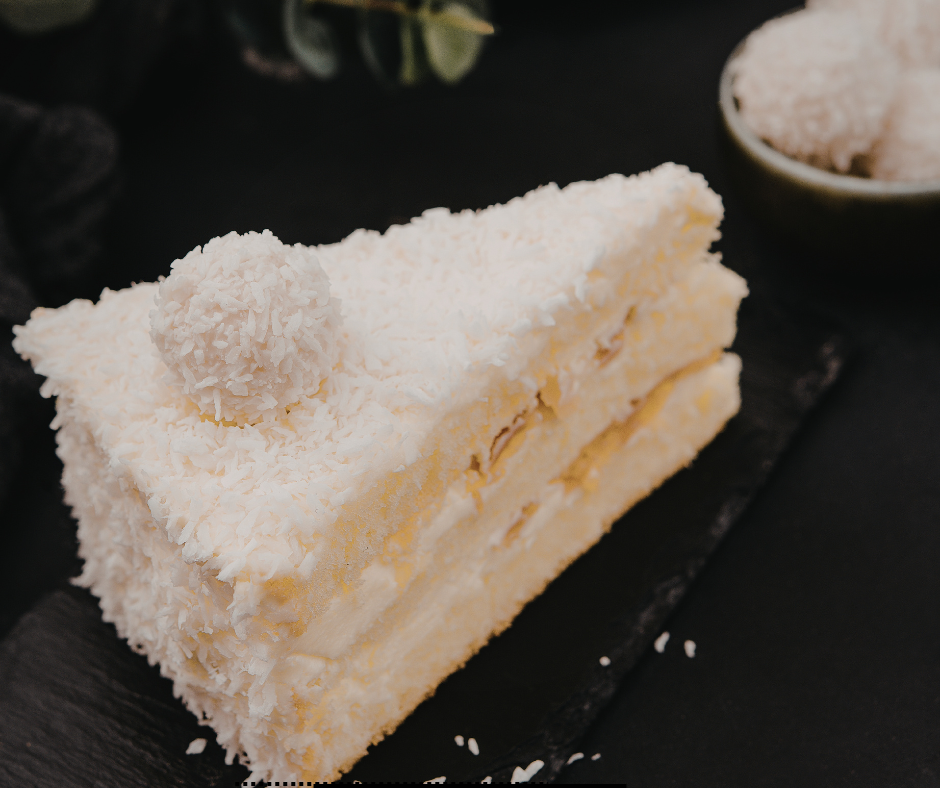
From my kitchen to yours, this Easter Coconut Cake recipe has been a beloved tradition in our family for years, and it’s always a hit with both young and old. The combination of moist, tender layers enveloped in a luscious cream cheese frosting and topped with fluffy shredded coconut creates a slice of heaven that not only delights the palate but also serves as a stunning centerpiece for your Easter feast.
Table of Contents
How to make Easter Coconut Cake
Easter Coconut Cake is a festive dessert traditionally served during Easter, especially in the United States and other Western countries.
Ingredients
For the Cake Layers:
- 2 ¾ cups (345g) all-purpose flour
- 1 tablespoon baking powder
- ½ teaspoon salt
- 1 cup (2 sticks) unsalted butter, softened
- 2 cups granulated sugar
- 4 large eggs, room temperature
- 1 tablespoon pure vanilla extract
- 1 ¼ cups full-fat coconut milk (or whole milk for a milder flavor)
- 1 cup shredded sweetened coconut
For the Cream Cheese Frosting:
- 1 cup (2 sticks) unsalted butter, softened
- 8 oz (1 block) cream cheese, softened
- 4 cups powdered sugar, sifted
- 1 teaspoon pure vanilla extract
- 2 tablespoons coconut milk (or heavy cream for consistency adjustment)
For Decoration:
- 2 cups shredded sweetened coconut
- Food coloring (optional, for pastel-tinted coconut)
- Easter-themed decorations like candy eggs, edible flowers, or chocolate bunnies
Instructions
Step 1: Prepare Your Ingredients and Preheat the Oven
- Preheat your oven to 350°F (175°C). Grease and lightly flour three 8-inch round cake pans, or line them with parchment paper for easy removal.
- Ensure all your ingredients are at room temperature for even mixing.
Step 2: Make the Cake Batter
- In a medium mixing bowl, whisk together the flour, baking powder, and salt. Set aside.
- In a large mixing bowl, cream the softened butter and sugar together with an electric mixer on medium speed until light and fluffy (about 3–4 minutes).
- Add the eggs, one at a time, beating well after each addition. Stir in the vanilla extract.
- Gradually alternate adding the dry ingredients and coconut milk to the batter, beginning and ending with the dry ingredients. Mix just until combined—avoid overmixing.
- Gently fold in the shredded coconut.
Step 3: Bake the Cake Layers
- Divide the batter evenly between the prepared cake pans. Smooth the tops with a spatula.
- Bake for 25–30 minutes, or until a toothpick inserted into the center comes out clean.
- Let the cakes cool in the pans for 10 minutes before transferring them to a wire rack to cool completely.
Step 4: Make the Cream Cheese Frosting
- In a mixing bowl, beat the softened butter and cream cheese together until smooth and fluffy (about 2 minutes).
- Gradually add the powdered sugar, one cup at a time, mixing on low speed until fully incorporated.
- Stir in the vanilla extract and coconut milk to adjust the consistency of the frosting — it should be creamy but spreadable.
Step 5: Assemble and Decorate
- Place one cooled cake layer on a serving plate or cake stand. Spread a generous layer of cream cheese frosting on top.
- Add the second cake layer, repeating the process. Top with the third layer and spread a thin “crumb coat” of frosting over the entire cake. Chill the crumb-coated cake for 15–20 minutes to help set the frosting and prevent crumbs.
- Apply a final layer of frosting, smoothing it out with an offset spatula.
Step 6: Add the Coconut and Decorations
- Press shredded coconut gently onto the sides and top of the cake until fully covered. For a fun, colorful twist, you can tint the coconut with a few drops of food coloring to create pastel hues. To do so, place the shredded coconut in a zip-top bag, add food coloring, and shake until evenly colored.
- Add Easter-themed decorations like candy eggs, edible flowers, or a chocolate nest on top for a festive touch.
Baking Tips for Success
- Measure Ingredients Properly: Use a kitchen scale if possible to ensure accuracy, especially for flour and sugar. Avoid packing flour into the measuring cup, as it can lead to dense cakes.
- Room Temperature Ingredients: Ensure your eggs, butter, and cream cheese are at room temperature for better mixing and smoother batter.
- Don’t Overmix the Batter: Overmixing can result in a dense cake. Mix just until combined.
- Tasting the Coconut: If you’re not a fan of overly strong coconut flavor, you can use whole milk instead of coconut milk and reduce the shredded coconut slightly.
- Chill the Cake Before Frosting: This step prevents crumbs from mixing into the frosting and makes spreading much easier.
- Get Creative With Decorations: Easter is the perfect time to get playful! Create a “nest” with toasted coconut and place mini chocolate eggs inside for an adorable centerpiece.
What to serve with
Easter Coconut Cake is already a delightful centerpiece for your dessert table. Its moist layers, creamy frosting, and light coconut flavor make it a treat that stands on its own.
a. Coffee and Espresso:
- A robust cup of coffee or a shot of espresso pairs beautifully with the sweetness of Easter Coconut Cake. For a more festive twist, serve flavored coffee like hazelnut, vanilla, or coconut coffee.
- Consider offering a latte or a cappuccino, topped with a sprinkle of cocoa powder or cinnamon, to elevate the cozy vibes.
b. Tea:
- Herbal Teas: Try a chamomile, rooibos, or lemon-ginger tea to balance the rich cake with a calming herbal note.
- Black Teas: Earl Grey or Darjeeling teas pair well with creamy frosting and coconut flavors.
- For a refreshing option, serve iced tea with a hint of lemon or peach.
c. Coconut or Tropical Drinks:
- Offering a coconut-enhanced beverage, like a coconut water mocktail or a piña colada-inspired drink, can pair the flavors seamlessly.
- You can also serve tropical fruit punches with pineapple or mango to match the festive, springtime theme.
d. Dessert Wines or Cocktails:
- A sweet Moscato or a light Riesling wine complements the sweetness of the cake without being overpowering.
- A Prosecco or champagne adds an elegant, bubbly touch to your gathering.
- For adults, consider serving a coconut- or lemon-infused cocktail, such as a Coconut Mojito or a Lemon Drop Martini.
Ingredients Substitutes
It’s easy to tweak an Easter Coconut Cake recipe to suit your needs. Below is a detailed guide on ingredient substitutes to help you bake a delicious cake without compromising texture or flavor.
a. All-Purpose Flour
If you don’t have all-purpose flour or need an alternative:
- Self-Rising Flour: Replace all-purpose flour with self-rising flour, but omit the baking powder and salt. For this Easter Coconut Cake recipe, you’ll need equal amounts of self-rising flour.
- Gluten-Free Flour Blend: Use a 1:1 gluten-free all-purpose flour blend for those with gluten sensitivity. Ensure the blend contains xanthan gum for structure.
- Almond Flour (Low-Carb Alternative): Substitute almond flour at a 1:1 ratio by weight (not volume). Note that the texture will be denser, so you may need to add an extra egg for binding.
b. Baking Powder
If you run out of baking powder, try this homemade substitute:
- Baking Soda + Acid: For every 1 tablespoon of baking powder, use 1 teaspoon of baking soda plus 2 teaspoons of white vinegar or lemon juice. Mix the acid into the liquid ingredients before combining with the dry.
c. Coconut Milk
Coconut milk adds richness and enhances the tropical flavor of the Easter Coconut Cake, but there are many alternatives:
- Whole Milk: Use the same amount if you want a more neutral flavor.
- Almond Milk or Oat Milk: Opt for these plant-based substitutes for a dairy-free option. They won’t add the same coconut flavor, but they work well in the cake.
- Evaporated Milk: Substitute in equal amounts if you want a creamier texture but don’t have coconut milk on hand.
- Coconut Cream: For a richer cake, you can replace coconut milk with coconut cream, but dilute it slightly to reduce its thickness.
d. Shredded Coconut
Shredded coconut contributes texture and flavor, but if you don’t have any or want to omit it for texture reasons:
- Toasted Coconut Chips: Use as a substitute for decoration or texture.
- Ground Almonds: Add a mild nutty flavor in place of coconut in the batter, but reduce the amount slightly to avoid altering the consistency.
- Oats or Coconut-Free Cake: Skip the shredded coconut altogether if needed, and the cake will still turn out delicious, though less tropical.
e. Butter
Butter contributes moisture, structure, and flavor. Here are alternatives:
- Margarine: Swap butter for margarine in a 1:1 ratio for a dairy-free option.
- Coconut Oil: This is a great substitute for butter in both the cake and frosting. Use the same quantity but ensure it is in a softened state.
- Vegetable Oil or Canola Oil: These oils produce a slightly denser texture but add plenty of moisture. Substitute in equal proportions for butter in the cake, but not in the frosting.
f. Eggs
If you’re out of eggs or need an egg-free option due to allergies or dietary restrictions:
- Flaxseed Meal: Mix 1 tablespoon of flaxseed meal with 2 ½ tablespoons of water per egg. Let it thicken for 5 minutes before using.
- Applesauce: Use ¼ cup of unsweetened applesauce per egg for moisture and binding.
- Yogurt or Buttermilk: Replace each egg with ¼ cup plain yogurt or buttermilk for a soft, tender crumb.
- Commercial Egg Replacer: Use a store-bought egg replacer according to the package instructions.
g. Vanilla Extract
If you don’t have vanilla extract or want a flavor twist:
- Almond Extract: Use ½ teaspoon for a nutty, aromatic flavor.
- Coconut Extract: For an extra boost of coconut flavor in the cake and frosting. Use sparingly to avoid overpowering (start with ½ teaspoon).
- Maple Syrup or Honey: Substitute vanilla with equal amounts of syrup or honey for a mild, sweet undertone.
Final Thoughts
This Easter Coconut Cake is not only delicious but also a show-stopper on the holiday dessert table. Its lightly tropical flavor and rich cream cheese frosting are sure to leave your guests smiling.
More Cake Recipes

Ingredients
For the Cake Layers:
- 2 ¾ cups (345g) all-purpose flour
- 1 tablespoon baking powder
- ½ teaspoon salt
- 1 cup (2 sticks) unsalted butter, softened
- 2 cups granulated sugar
- 4 large eggs, room temperature
- 1 tablespoon pure vanilla extract
- 1 ¼ cups full-fat coconut milk
- 1 cup shredded sweetened coconut
For the Cream Cheese Frosting:
- 1 cup (2 sticks) unsalted butter, softened
- 8 oz (1 block) cream cheese, softened
- 4 cups powdered sugar, sifted
- 1 teaspoon pure vanilla extract
- 2 tablespoons coconut milk
For Decoration:
- 2 cups shredded sweetened coconut
- Food coloring (optional, for pastel-tinted coconut)
- Easter-themed decorations like candy eggs
Instructions
Step 1: Prepare Your Ingredients and Preheat the Oven
- Preheat your oven to 350°F (175°C). Grease and lightly flour three 8-inch round cake pans, or line them with parchment paper for easy removal.
- Ensure all your ingredients are at room temperature for even mixing.
Step 2: Make the Cake Batter
- In a medium mixing bowl, whisk together the flour, baking powder, and salt. Set aside.
- In a large mixing bowl, cream the softened butter and sugar together with an electric mixer on medium speed until light and fluffy (about 3–4 minutes).
- Add the eggs, one at a time, beating well after each addition. Stir in the vanilla extract.
- Gradually alternate adding the dry ingredients and coconut milk to the batter, beginning and ending with the dry ingredients. Mix just until combined—avoid overmixing.
- Gently fold in the shredded coconut.
Step 3: Bake the Cake Layers
- Divide the batter evenly between the prepared cake pans. Smooth the tops with a spatula.
- Bake for 25–30 minutes, or until a toothpick inserted into the center comes out clean.
- Let the cakes cool in the pans for 10 minutes before transferring them to a wire rack to cool completely.
Step 4: Make the Cream Cheese Frosting
- In a mixing bowl, beat the softened butter and cream cheese together until smooth and fluffy (about 2 minutes).
- Gradually add the powdered sugar, one cup at a time, mixing on low speed until fully incorporated.
- Stir in the vanilla extract and coconut milk to adjust the consistency of the frosting — it should be creamy but spreadable.
Step 5: Assemble and Decorate
- Place one cooled cake layer on a serving plate or cake stand. Spread a generous layer of cream cheese frosting on top.
- Add the second cake layer, repeating the process. Top with the third layer and spread a thin "crumb coat" of frosting over the entire cake. Chill the crumb-coated cake for 15–20 minutes to help set the frosting and prevent crumbs.
- Apply a final layer of frosting, smoothing it out with an offset spatula.
Step 6: Add the Coconut and Decorations
- Press shredded coconut gently onto the sides and top of the cake until fully covered. For a fun, colorful twist, you can tint the coconut with a few drops of food coloring to create pastel hues. To do so, place the shredded coconut in a zip-top bag, add food coloring, and shake until evenly colored.
- Add Easter-themed decorations like candy eggs, edible flowers, or a chocolate nest on top for a festive touch.