
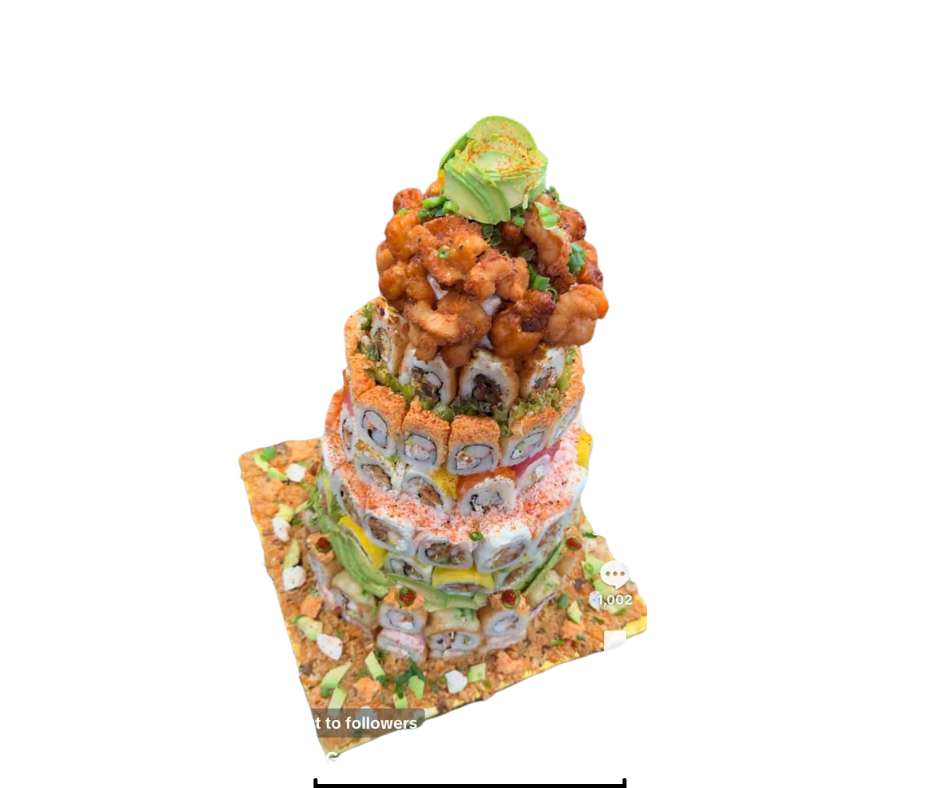
Inspired by the creative fusion dishes at “Sushi y Mariscos Guamuchil” and similar sushi spots, this Guamuchil Sushi Cake recipe brings you the essence of sushi in a bold new form. It layers all your favorite sushi components—fluffy sushi rice, fresh seafood, colorful veggies, and mouthwatering sauces—into a striking, cake-like centerpiece.
Table of Contents
How to make Guamuchil Sushi Cake
Guamúchil Sushi Cake is a bold, over-the-top Mexican-style sushi dish, layered and shaped like a cake rather than rolled like traditional sushi.
Ingredients
Base Layer (Sushi Rice)
- 2 cups of sushi rice
- 2 ½ cups water
- ¼ cup rice vinegar
- 2 tbsp sugar
- 1 tbsp salt
Layers & Toppings
- 6 oz fresh salmon (sashimi-grade)
- 6 oz fresh tuna (sashimi-grade)
- Cooked shrimp or imitation crab meat (optional)
- 1 avocado, thinly sliced
- ½ cucumber, julienned
- ½ carrot, julienned
- 2-3 sheets of nori (seaweed)
- Spicy mayo (mix ½ cup mayonnaise + 2 tbsp sriracha)
- Soy sauce (for serving)
- Unagi sauce or teriyaki glaze (optional)
Optional Garnishes:
- Sesame seeds
- Thinly sliced green onions
- Masago or tobiko (fish roe)
- Pickled ginger
Instructions
Step 1: Prepare the Sushi Rice
- Rinse the sushi rice thoroughly under cold water until the water runs clear. This removes excess starch and ensures your rice has the perfect texture.
- Cook the rice in a rice cooker or on the stovetop with the measured water. Let it cool slightly.
- Mix the rice vinegar, sugar, and salt in a small bowl until dissolved, then gently fold them into the cooked rice. Be careful not to mash the rice while mixing. Allow the rice to cool to room temperature.
Step 2: Plan Your Layers
- Decide the order of your cake layers based on flavor balance and aesthetics. A common arrangement includes:
- Bottom layer: Sushi rice
- Middle layers: Proteins mixed with sauces (e.g., spicy salmon or crab with spicy mayo)
- Top layer: Vegetables and sliced fish for decoration
- Prepare and slice all your ingredients to make assembly easier.
Step 3: Assemble the Sushi Cake
- Line a round springform cake pan or deep bowl with plastic wrap (this makes it easy to remove later).
- Press a firm layer of sushi rice into the bottom of the pan. Use a rice paddle or your hands (wet them slightly to prevent sticking).
- Add your second layer—this can be nori sheets followed by a mixture of crab and spicy mayo, or julienned cucumber and carrots for freshness.
- Repeat layers as desired, alternating rice, veggies, and proteins. Aim for a balanced combination of flavors and textures.
- For the top layer, arrange thin slices of sashimi (such as salmon or tuna) in a delicate pattern, then fan out avocado slices for added beauty.
Step 4: Decorate & Finish
- Drizzle spicy mayo and unagi sauce diagonally or in circles on the top.
- Sprinkle sesame seeds, green onions, and masago/tobiko for added color.
- Cover the cake and refrigerate for about 30 minutes to help it set.
Step 5: Slice & Serve
- Carefully remove the plastic wrap and transfer the sushi cake to a serving platter.
- Slice like a regular cake and serve with soy sauce, pickled ginger, and wasabi on the side for dipping.
Tips for Success
- Use Fresh Ingredients: Since sushi cake contains raw fish, make sure to use sashimi-grade seafood to ensure safety and optimal taste.
- Customize Layers: Not a fan of raw fish? Swap it out with cooked shrimp, imitation crab, or even tofu for a vegetarian option.
- Tools Matter: A springform pan works best for maintaining the structure of your sushi cake, but you can use a regular pan as long as it’s lined with a wrap for easy removal.
- Experiment with Sauces: While spicy mayo and soy sauce are classic choices, feel free to add wasabi cream or ponzu sauce to elevate the flavor.
- Work Quickly with Rice: Sushi rice can dry out if left exposed for too long, so try to assemble the layers promptly.
What to serve with
The Guamuchil Sushi Cake is a bold, flavorful, and visually captivating dish, making it the star of any gathering or meal. But pairing it with the right sides, appetizers, and beverages can elevate the experience even further!
1. Miso Soup: A warm bowl of miso soup is always a perfect pairing for sushi dishes. Its light, savory broth made from miso paste and dashi contrasts beautifully with the rich flavors of the Guamuchil Sushi Cake.
2. Japanese Pickles (Tsukemono): Serve a small plate of pickled vegetables like pickled radishes (takuan), pickled cucumbers, or pickled plums (umeboshi). These bring acidity and crunch to balance the richness of the sushi cake’s toppings.
3. Edamame: Lightly salted and steamed edamame beans (young soybeans) are an excellent appetizer or side. They’re healthy, easy to prepare, and add a satisfying crunch to complement the softness of the sushi cake.
Ingredients Substitutes
Not everyone has access to traditional sushi ingredients or shares the same dietary preferences, but that doesn’t mean you can’t enjoy the irresistible flavors of a Guamuchil Sushi Cake.
Substitutes for Sushi Rice
The foundation of any sushi recipe is its rice, but you can still make delicious alternatives if sushi rice isn’t available.
1. Jasmine Rice or Short-Grain White Rice: If sushi rice (short-grain Japanese rice) isn’t accessible, you can use jasmine rice, short-grain white rice, or medium-grain rice as substitutes.
2. Quinoa: For a gluten-free and protein-packed option, cooked quinoa works well as a rice substitute. Season it with rice vinegar, sugar, and salt to bring out the traditional sushi flavors.
3. Cauliflower Rice: Low-carb lovers can opt for cauliflower rice as a healthier alternative. Simply steam or sauté the cauliflower rice, season it with vinegar, and press it into the pan for a lighter base.
Substitutes for Protein
Seafood is often a key ingredient in sushi cakes, but you can always swap traditional sashimi-grade fish for other proteins or plant-based alternatives.
1. Cooked Shrimp or Crab: If sashimi-grade fish like tuna or salmon isn’t available, substitute with cooked shrimp or imitation crab meat (surimi). Both work well and can be seasoned with spicy mayo to boost flavor.
2. Smoked Salmon: When raw fish isn’t an option, smoked salmon adds a similar flavor profile and can be layered on top for aesthetic appeal.
3. Chicken or Tofu: For a non-seafood alternative, use cooked chicken breast, seasoned lightly with soy sauce or teriyaki sauce.
4. Plant-Based Seafood: Many brands now offer vegan seafood substitutes like imitation salmon, tuna, or shrimp made from vegetables or soy protein. These are ideal for plant-based versions of the sushi cake.
Substitutes for Nori (Seaweed)
Nori sheets give sushi cakes an earthy, umami flavor, but there are alternatives if you can’t find or don’t want to use them.
1. Spinach Wraps: Use spinach tortillas or wraps as a substitute for layering, especially if you’re looking for a milder flavor.
2. Collard Greens: Blanched collard greens or kale leaves can act as edible layers between the ingredients. They’re healthy and retain structural integrity for layering.
3. No Substitute: Feel free to skip the nori entirely if you prefer. You can incorporate the umami flavor elsewhere, such as by sprinkling furikake (Japanese rice seasoning) or adding miso-based sauces.
Substitutes for Vegetables
The vegetables in sushi cakes add texture, freshness, and visual appeal. Here are alternatives for common ingredients:
1. Avocado: If avocado isn’t available or is out of season, use sliced ripe mango for a slightly sweet twist. Mango pairs beautifully with seafood.
2. Cucumber: Replace cucumber with zucchini or thinly sliced green bell peppers for a crunchy, refreshing element.
3. Carrots: If carrots aren’t readily available, try thinly sliced red bell peppers or daikon radish. Both add a slight crunch and colorful contrast to the dish.
Final Thoughts
The Guamuchil Sushi Cake is not only visually stunning but perfect for sharing. The best part? It’s completely customizable based on your taste preferences.
More Cake Recipes:

Ingredients
Base Layer (Sushi Rice)
- 2 cups of sushi rice
- 2 ½ cups water
- ¼ cup rice vinegar
- 2 tbsp sugar
- 1 tbsp salt
Layers & Toppings
- 6 oz fresh salmon (sashimi-grade)
- 6 oz fresh tuna (sashimi-grade)
- Cooked shrimp
- 1 avocado, thinly sliced
- ½ cucumber, julienned
- ½ carrot, julienned
- 2-3 sheets of nori (seaweed)
- Spicy mayo
- Soy sauce (for serving)
- Unagi sauce
Optional Garnishes:
- Sesame seeds
- Thinly sliced green onions
- Masago or tobiko (fish roe)
- Pickled ginger
Instructions
Step 1: Prepare the Sushi Rice
- Rinse the sushi rice thoroughly under cold water until the water runs clear. This removes excess starch and ensures your rice has the perfect texture.
- Cook the rice in a rice cooker or on the stovetop with the measured water. Let it cool slightly.
- Mix the rice vinegar, sugar, and salt in a small bowl until dissolved, then gently fold them into the cooked rice. Be careful not to mash the rice while mixing. Allow the rice to cool to room temperature.
Step 2: Plan Your Layers
- Decide the order of your cake layers based on flavor balance and aesthetics. A common arrangement includes:
- Bottom layer: Sushi rice
- Middle layers: Proteins mixed with sauces (e.g., spicy salmon or crab with spicy mayo)
- Top layer: Vegetables and sliced fish for decoration
- Prepare and slice all your ingredients to make assembly easier.
Step 3: Assemble the Sushi Cake
- Line a round springform cake pan or deep bowl with plastic wrap (this makes it easy to remove later).
- Press a firm layer of sushi rice into the bottom of the pan. Use a rice paddle or your hands (wet them slightly to prevent sticking).
- Add your second layer—this can be nori sheets followed by a mixture of crab and spicy mayo, or julienned cucumber and carrots for freshness.
- Repeat layers as desired, alternating rice, veggies, and proteins. Aim for a balanced combination of flavors and textures.
- For the top layer, arrange thin slices of sashimi (such as salmon or tuna) in a delicate pattern, then fan out avocado slices for added beauty.
Step 4: Decorate & Finish
- Drizzle spicy mayo and unagi sauce diagonally or in circles on the top.
- Sprinkle sesame seeds, green onions, and masago/tobiko for added color.
- Cover the cake and refrigerate for about 30 minutes to help it set.
Step 5: Slice & Serve
- Carefully remove the plastic wrap and transfer the sushi cake to a serving platter.
- Slice like a regular cake and serve with soy sauce, pickled ginger, and wasabi on the side for dipping.