
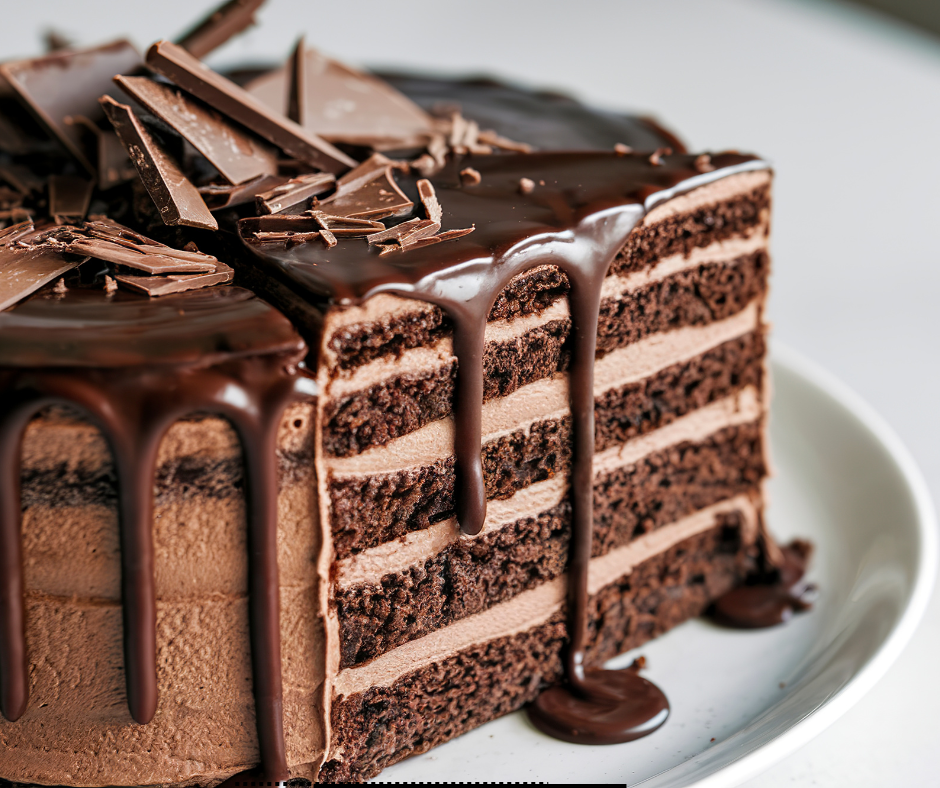
I’m sharing my go-to chocolate birthday cake recipe—a tried-and-true favorite that’s guaranteed to make the guest of honor smile. From its perfectly moist layers to its luscious frosting, this cake is more than a dessert; it’s a celebration centerpiece. Even if you’re new to baking or simply looking to wow, this recipe will guide you through the process step-by-step, so you can bake with confidence (and with love!).
Table of Contents
How to make Chocolate Birthday Cake
A Chocolate Birthday Cake is a classic celebration cake made with rich chocolate-flavored sponge layers, typically filled and frosted with chocolate icing or ganache, and decorated for a birthday occasion.
Ingredients
For the Cake:
- 2 ½ cups (315g) all-purpose flour
- 1 cup (90g) unsweetened cocoa powder
- 2 ½ tsp baking powder
- 1 tsp baking soda
- ½ tsp salt
- 1 cup (240ml) whole milk (room temperature)
- ½ cup (120ml) vegetable oil
- 2 large eggs (room temperature)
- 2 tsp vanilla extract
- 1 cup (240ml) boiling water (you can also use hot coffee for extra richness)
- 2 cups (400g) granulated sugar
For the Chocolate Buttercream Frosting:
- 1 cup (230g) unsalted butter (softened)
- 3 ¾ cups (450g) powdered sugar
- ⅔ cup (75g) unsweetened cocoa powder
- 1 tsp vanilla extract
- ¼ cup (60ml) heavy cream (adjust for desired texture)
- Pinch of salt
Instructions
- Preheat your oven to 350°F (175°C).
- Grease and line two 8-inch (or 9-inch) round cake pans with parchment paper to prevent sticking.
- In a large mixing bowl, sift together the flour, cocoa powder, baking powder, baking soda, and salt. This step ensures your cake will be light and lump-free.
- Whisk together the eggs, milk, oil, and vanilla extract in another bowl until smooth. Gradually stir in the sugar and mix until well combined.
- Slowly add the dry ingredients to the wet mixture, stirring until a smooth batter forms. Don’t overmix—too much stirring can make the cake dense.
- Carefully mix in the boiling water (or hot coffee). The batter will thin out, resulting in a smooth texture that bakes into a moist cake.
- Divide the batter evenly between the prepared pans and bake for 30-35 minutes, or until a toothpick inserted into the center comes out clean.
- Let the cakes cool in the pans for 10-15 minutes, then transfer them to a wire rack to cool completely.
- Beat the softened butter until creamy. Sift in the powdered sugar and cocoa powder, then add the vanilla extract, salt, and heavy cream. Whip until the frosting is fluffy and spreadable. Adjust the texture with cream (if too thick) or powdered sugar (if too thin).
- Once the cake layers are completely cool, spread frosting over the first layer and stack the second layer on top. Frost the top and sides of the cake evenly. For a professional look, smooth the frosting with a spatula or add decorative piping.
Tips for Success
- Use Room Temperature Ingredients: This helps the batter mix evenly and ensures a consistent bake.
- Choose Quality Cocoa Powder: For a deep chocolate flavor, opt for a high-quality unsweetened cocoa powder.
- Make It Extra Moist: Substitute part of the whole milk with buttermilk or sour cream for a richer, softer cake.
- Let Your Cake Cool: Don’t frost warm cake layers, as the frosting will melt and slide right off. Patience pays off!
- Customize Decorations: Try adding birthday-themed sprinkles, chocolate shavings, or even edible glitter for a magical touch.
What to serve with
While a Chocolate Birthday Cake can easily steal the show on its own, pairing it with the right sides can take your celebration to the next level.
1. Refreshing Beverages
Chocolate cake is rich and indulgent, so pairing it with complementary drinks can help balance the flavors and cleanse the palate.
- Milk: Classic and timeless, a cold glass of milk (regular, almond, or oat) is the ultimate pairing for chocolate cake. Its creamy texture cuts through the richness of the Chocolate Birthday Cake.
- Coffee or Espresso: The slight bitterness of coffee contrasts beautifully with the sweetness of the cake. Consider serving your guests freshly brewed coffee or even lattes for an elegant addition.
- Hot Tea: A warm herbal tea, green tea, or even a black tea can help balance out the heavy flavors of chocolate. Earl Grey with hints of bergamot works particularly well.
- Dessert Wine: For adults celebrating, a sweet red dessert wine (like ruby port or Moscato) can pair wonderfully with chocolate for a luxurious finish.
2. Ice Cream
Ice cream is an excellent accompaniment to a chocolate birthday cake. Serve alongside or on top of the cake slice for an indulgent treat.
- Vanilla Ice Cream: The subtle flavor of vanilla pairs perfectly with chocolate. Its creaminess complements the texture of the cake without overpowering it.
- Chocolate Ice Cream: Double the chocolate for those who are true chocoholics! Consider serving dark chocolate ice cream for an extra-rich pairing.
- Salted Caramel Ice Cream: Add a sweet-and-salty dimension with salted caramel ice cream. Its buttery notes work wonderfully with deep chocolate flavors.
- Fruit Sorbet: If you want something lighter, a tangy fruit sorbet—like raspberry or passionfruit—contrasts the richness of the chocolate cake in the best way.
Ingredients Substitutes
Running out of ingredients or looking for healthier, dairy-free, or vegan options doesn’t mean you have to skip making your Chocolate Birthday Cake! With the right substitutes, you can tweak the recipe while still keeping it delicious, moist, and flavorful.
1. All-Purpose Flour Substitutes
Flour plays a crucial role in giving chocolate cake its structure. If you don’t have all-purpose flour, here are alternatives:
- Whole Wheat Flour: Swap out all-purpose flour with whole wheat flour, but use slightly less (2 ¼ cups instead of 2 ½ cups), as whole wheat flour absorbs liquid differently. This substitution will give your cake a denser texture.
- Gluten-Free Flour: Use a gluten-free all-purpose baking mix. Ensure the blend includes xanthan gum or guar gum to mimic the structure gluten provides.
- Almond Flour: Almond flour offers a nutty taste but makes the cake slightly denser. For best results, combine almond flour with a gluten-free baking mix rather than using it as a 1:1 substitute.
- Oat Flour: Use oat flour for a softer texture. Replace 1 cup of all-purpose flour with 1 ⅓ cups of oat flour, as it’s lighter and absorbs more moisture.
2. Cocoa Powder Substitutes
Cocoa powder provides the rich chocolate flavor in the cake. If you don’t have cocoa powder, try these alternatives:
- Unsweetened Chocolate: Swap ¼ cup cocoa powder for 1 ounce of unsweetened chocolate, melted and cooled. Reduce the liquid in the recipe slightly to compensate for the chocolate’s moisture.
- Carob Powder: Use 1:1 by replacing cocoa powder with carob powder. It has a natural sweetness, so you may need less sugar.
- Dutch-Processed Cocoa: If your recipe calls for natural cocoa powder, you can use Dutch-processed cocoa. However, you’ll need to ensure there’s baking powder in the recipe, as Dutch-processed cocoa interacts differently with leaveners.
3. Sugar Substitutes
Granulated sugar adds sweetness and aids in moistness. Below are substitutions for sugar:
- Brown Sugar: Replace granulated sugar with an equal amount of light or dark brown sugar. This will add deeper flavor and make the cake moister.
- Coconut Sugar: Use as a 1:1 substitute; it adds a caramel-like flavor. Note that coconut sugar is less sweet, so you might want to add an extra tablespoon.
- Honey or Maple Syrup: Replace 1 cup sugar with ¾ cup honey or maple syrup. Reduce other liquids in the recipe by ¼ cup to balance the liquid content.
- Sugar-Free Sweeteners: Stevia, erythritol, or monk fruit sweeteners work well for low-calorie cakes. Follow package instructions for sweetness equivalency.
4. Eggs Substitutes
Eggs help with binding and provide structure. Here’s how to replace them:
- Flaxseeds or Chia Seeds: Mix 1 tbsp ground flaxseed or chia seeds with 3 tbsp water per egg. Let it sit for 5-10 minutes until thickened. Great for vegan baking.
- Applesauce: Use ¼ cup unsweetened applesauce per egg. This replacement adds moisture but can make the cake slightly denser.
- Yogurt or Sour Cream: Replace each egg with ¼ cup plain yogurt or sour cream. Full-fat versions work best to maintain the cake’s structure.
- Mashed Banana: Mash ½ banana per egg substitution. This adds natural sweetness and moisture but may slightly alter the flavor.
- Silken Tofu: Blend ¼ cup silken tofu for every egg. This substitute works well for dense cake varieties.
5. Milk Substitutes
Milk provides moisture and helps blend ingredients smoothly.
- Plant-Based Milks: Substitute regular milk with almond milk, soy milk, oat milk, or coconut milk in a 1:1 ratio. For richer results, use full-fat coconut milk.
- Buttermilk Substitute: No buttermilk? Add 1 tbsp vinegar or lemon juice to 1 cup plant-based or regular milk, and let it sit for 5 minutes.
- Water or Coffee: You can use plain water or brewed coffee if you don’t have milk. Coffee enhances chocolate flavor beautifully!
- Cream: Dilute heavy cream with water at a 50:50 ratio to mimic milk texture.
6. Vegetable Oil Substitutes
Oil ensures the cake is moist and tender. If you don’t have vegetable oil, consider these swaps:
- Butter: Replace equal amounts of vegetable oil with melted butter for a richer flavor.
- Coconut Oil: Use 1:1 coconut oil, but ensure it’s melted and cooled before mixing it into the recipe.
- Applesauce: Replace ½ cup oil with ½ cup applesauce for a lower-fat option. This works well but may slightly alter texture.
- Mashed Avocado: Replace oil with an equal amount of mashed avocado for a healthier fat substitute. Blend it thoroughly for smooth results.
Final Thoughts
This Chocolate Birthday Cake is a delicious way to turn any celebration into a memorable experience.
More Birthday Cake Recipes:
- Easy Vanilla Birthday Cake Recipe
- Easy Strawberry Birthday Cake Recipe
- Copycat Cheesecake Factory Birthday Cake Recipe

Ingredients
For the Cake:
- 2 ½ cups (315g) all-purpose flour
- 1 cup (90g) unsweetened cocoa powder
- 2 ½ tsp baking powder
- 1 tsp baking soda
- ½ tsp salt
- 1 cup (240ml) whole milk (room temperature)
- ½ cup (120ml) vegetable oil
- 2 large eggs (room temperature)
- 2 tsp vanilla extract
- 1 cup (240ml) boiling water
- 2 cups (400g) granulated sugar
For the Chocolate Buttercream Frosting:
- 1 cup (230g) unsalted butter (softened)
- 3 ¾ cups (450g) powdered sugar
- ⅔ cup (75g) unsweetened cocoa powder
- 1 tsp vanilla extract
- ¼ cup (60ml) heavy cream
- Pinch of salt
Instructions
- Preheat your oven to 350°F (175°C).
- Grease and line two 8-inch (or 9-inch) round cake pans with parchment paper to prevent sticking.
- In a large mixing bowl, sift together the flour, cocoa powder, baking powder, baking soda, and salt. This step ensures your cake will be light and lump-free.
- Whisk together the eggs, milk, oil, and vanilla extract in another bowl until smooth. Gradually stir in the sugar and mix until well combined.
- Slowly add the dry ingredients to the wet mixture, stirring until a smooth batter forms. Don’t overmix—too much stirring can make the cake dense.
- Carefully mix in the boiling water (or hot coffee). The batter will thin out, resulting in a smooth texture that bakes into a moist cake.
- Divide the batter evenly between the prepared pans and bake for 30-35 minutes, or until a toothpick inserted into the center comes out clean.
- Let the cakes cool in the pans for 10-15 minutes, then transfer them to a wire rack to cool completely.
- Beat the softened butter until creamy. Sift in the powdered sugar and cocoa powder, then add the vanilla extract, salt, and heavy cream. Whip until the frosting is fluffy and spreadable. Adjust the texture with cream (if too thick) or powdered sugar (if too thin).
- Once the cake layers are completely cool, spread frosting over the first layer and stack the second layer on top. Frost the top and sides of the cake evenly. For a professional look, smooth the frosting with a spatula or add decorative piping.